What to remember
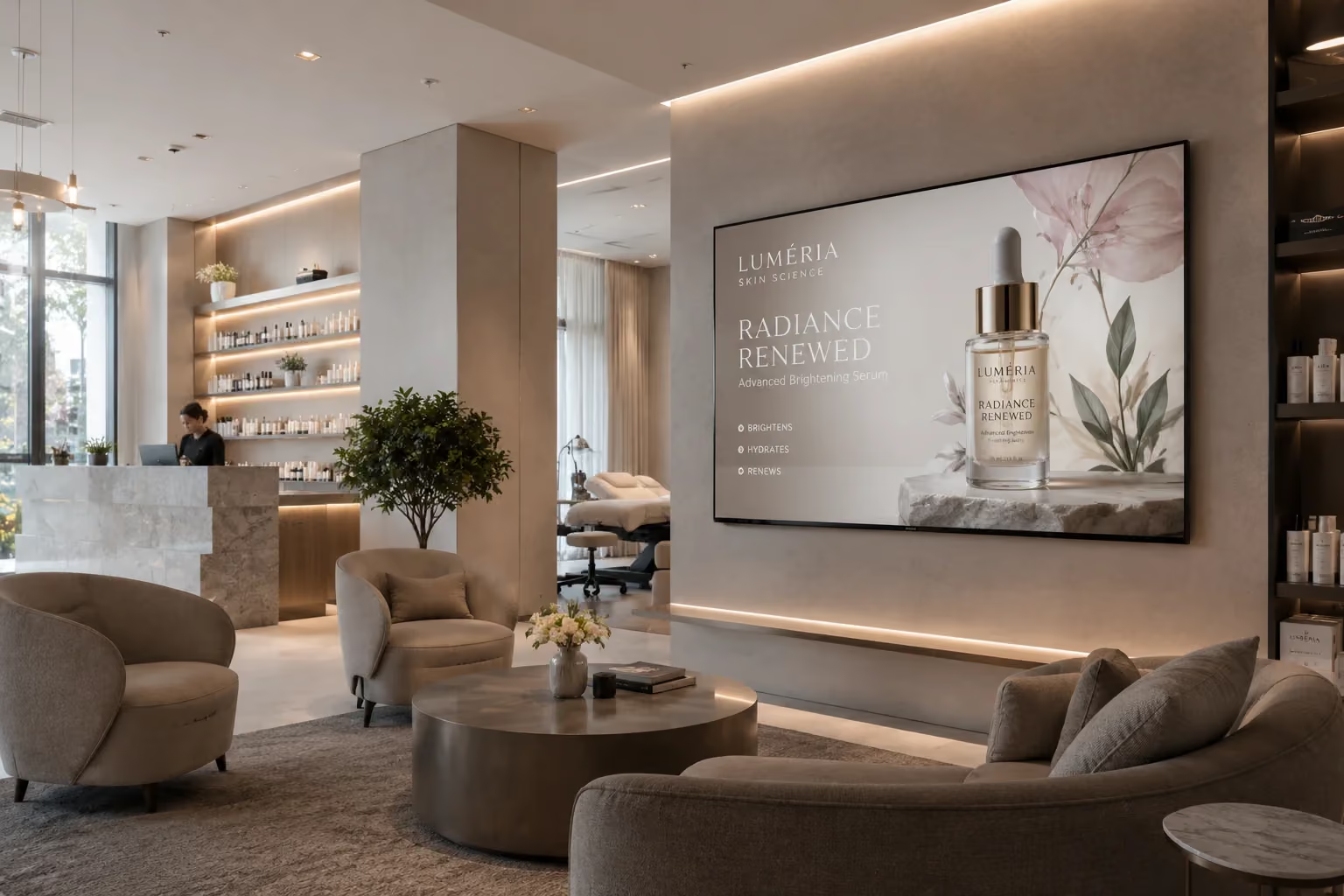
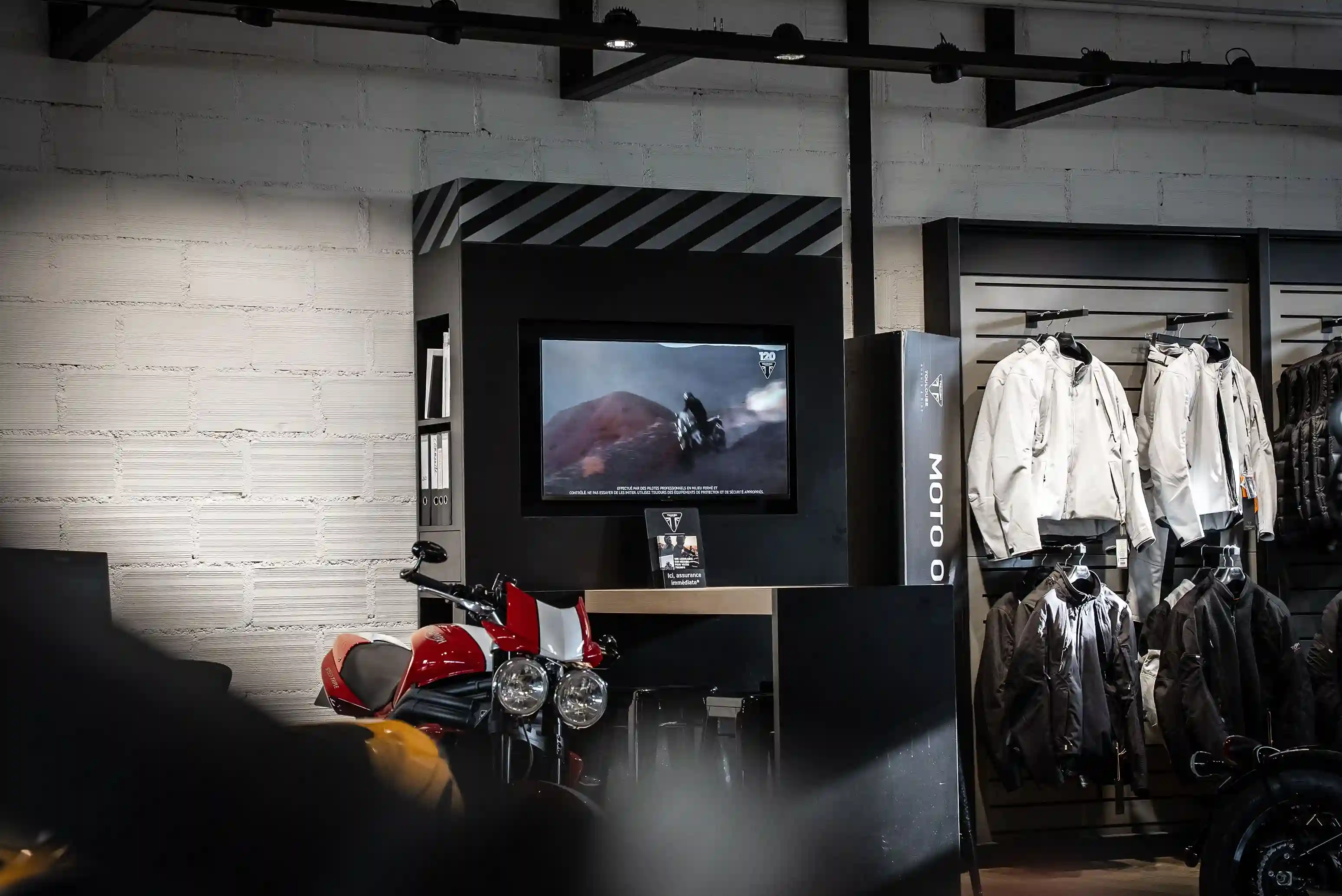
Customer experience is a powerful differentiator. In the retail world, when products and prices are equivalent, customers will always favor the brand that can make its point of sale more attractive and efficient. Digital signage, with its impactful, contextualized, and always up-to-date content, plays a significant role in a brand's attractiveness, the perceived waiting time, and the overall customer experience.
Waiting time: a friction point to overcome
Occupied time feels shorter than unoccupied time. This is explained by researcher David Maister in his work, “ The Psychology of Waiting Lines ”. The more retailers can divert customers' attention and minimize boredom during the downtime of a purchase, the faster time seems to pass. Screens strategically placed at points likely to cause the most friction can subtly manage customer expectations, inform or entertain them, all while strengthening the brand image of retail networks.
In large retail stores, the two most critical moments are waiting at the checkout and searching for information when staff are unavailable. For agencies or service sales (restaurants, tertiary sector, etc.), customers must wait before being attended to or in case of professional delays. These are all key moments that require a reduction in perceived waiting time.
Several strategies can be applied to minimize perceived waiting time:
- Inform the customer about the reasons for the wait and the time they can expect to spend, using dynamic signage adapted to traffic flow.
- Transform this moment into useful time : present informative content on screens, generate better awareness of the offering, foster brand engagement, etc.
- Add a playful element with interactive games, promotional operations, contests, etc.
Digital signage and customer waiting: better information to reduce frustration
Customer waiting is one of the main points of friction in stores. It can occur at the entrance, in aisles, in fitting rooms, at the pickup counter, or at checkout. Even when objectively short, it can degrade the experience if the customer lacks information, doesn't understand why they are waiting, or feels like they are wasting their time. Therefore, reducing waiting time in stores isn't just about speeding up service. It's also about better organizing, better informing, and better engaging customers during these transitional moments.
Better informing customers during wait times
Digital signage directly impacts perceived wait times. By broadcasting useful messages on in-store screens, retailers can explain the steps to follow, direct customers to the correct queue, announce the opening of a new checkout, remind them of available services, or highlight alternatives like order pickup, mobile scanning, or self-service kiosks. Customers no longer need to search for information or ask a salesperson: they quickly understand where to go and what to do.
Tailoring messages to store zones
This approach is particularly useful during peak times. During busy periods, digital signage can relay real-time operational information: checkout availability, estimated store wait times, less crowded areas, traffic flow instructions, or reassuring messages. The goal is not to hide the wait, but to make it more transparent and acceptable. An informed customer tolerates a delay better than one left without explanation.
Transforming wait times into valuable moments
Screens can also transform checkout wait times into an opportunity for commercial value. Current promotions, new products, loyalty programs, complementary services, usage tips, or inspiring content: these messages make the time spent in line useful. They help maintain customer attention while supporting the store's business objectives without creating excessive sales pressure.
To be effective, this communication must remain clear, contextualized, and adapted to the specific waiting moment. A screen placed near checkouts should not display the same content as a screen located at the entrance or in a pickup area. For retailers, managing customer wait times requires a communication strategy adapted to different store zones, traffic flow, and visitors' actual needs.
Queue Management: Why Digital Signage Improves the Customer Experience?
Queue management is both an operational and relational challenge. In-store, a poorly organized queue quickly gives an impression of disorder, even when staff are doing their best. Conversely, a clear, visible queue supported by relevant communication helps reassure customers and streamline their journey. Digital signage acts as a mediator between the store's internal organization and the customer's perception.
Streamlining queues without mobilizing staff
Specifically, screens allow guiding customers without constantly engaging sales teams. They can indicate which checkout is open, direct to a specific counter, remind customers of priority access, or broadcast simple instructions for preparing payment, order pickup, or product exchange. This information reduces hesitation, limits unnecessary movement, and facilitates circulation in sensitive store areas.
Reducing frustration associated with checkout wait times
Digital signage is also an important lever for reducing frustration associated with checkout wait times. When a customer sees that the situation is being addressed, that a message informs them, or that a relevant offer is presented, their perception changes. The in-store wait time feels less burdensome because it is accompanied. This dimension is essential in retail, where satisfaction depends not only on the product purchased but on the entire in-store experience.
Turning the queue into a valuable touchpoint
Content displayed during wait times can also strengthen the relationship with the brand. A brand can highlight its commitments, explain a service, promote an app, showcase its loyalty program, or present product recommendations adapted to the context. The in-store queue then becomes a full-fledged touchpoint, capable of extending the commercial and service message without interrupting the customer's journey.
Centralizing messages based on peak traffic
This approach is even more effective when it relies on centralized content management. Messages can be adapted according to schedules, stores, commercial campaigns, or traffic levels. A brand can thus harmonize its communication while allowing each point of sale to broadcast the most useful local information.
This is precisely what the customer cases presented later in the article demonstrate: when screens are integrated into an in-store communication strategy, they don't just serve to display attractive content. They become a concrete tool for better managing customer wait times, streamlining queues, and improving the in-store experience.
Customer Cases: How Axa, Boulanger, and PPG Improved the In-Store Customer Experience
Good practices are only useful when shared. Here are three concrete examples to draw inspiration from.
Boulanger : improving the customer experience at checkout
For the home equipment specialist, dynamic display plays a key role in capturing the attention of customers waiting in line at checkouts. On its screens, Boulanger promotes its products and offers, and broadcasts content from its partner brands and suppliers, while anchoring itself in local reality to maximize the impact of its communications, particularly with messages tailored to its catchment area.

In-store studies have shown that the customer experience was improved at the checkout. The actual waiting time was measured and then compared with the perceived waiting time by customers. The latter was 2 to 4 minutes shorter for customers with access to a dynamic display screen, thus contributing to a better in-store experience.
Axa : interactive screens to keep customers entertained while waiting

The agency was looking for a solution to welcome its customers, inform them about new products and offers, and reduce their perception of waiting time. With the installation of an interactive dynamic display solution and the provision of a tablet, visitors have access to a video library they can choose to broadcast on screen. Customers can thus consult predefined content to find information on the most relevant offer for them, which leads to a 53% higher message retention rate.
PPG Industries : Enhancing waiting times in Comptoirs Seigneurie Gauthier stores
In the 200 paint and varnish stores for individuals and professionals, customers have to wait while their order is being prepared. To reduce perceived waiting time, the brand created a friendly space where customers and sales assistants can chat over coffee, all while connected screens relay the brand's communications (news, commercial animations, promotion of offers and services, etc.). Waiting times have thus become moments of sharing and brand enhancement.
When unavoidable, waiting time must be managed. To do this, you can create informative and engaging moments to occupy customers' minds and limit frustration, as we've seen in the previous use cases. Thanks to a network of remotely controllable screens, you can simplify the management of your in-store communication and optimize the customer experience across all stores. A way to combine return on investment and customer experience.


.avif)