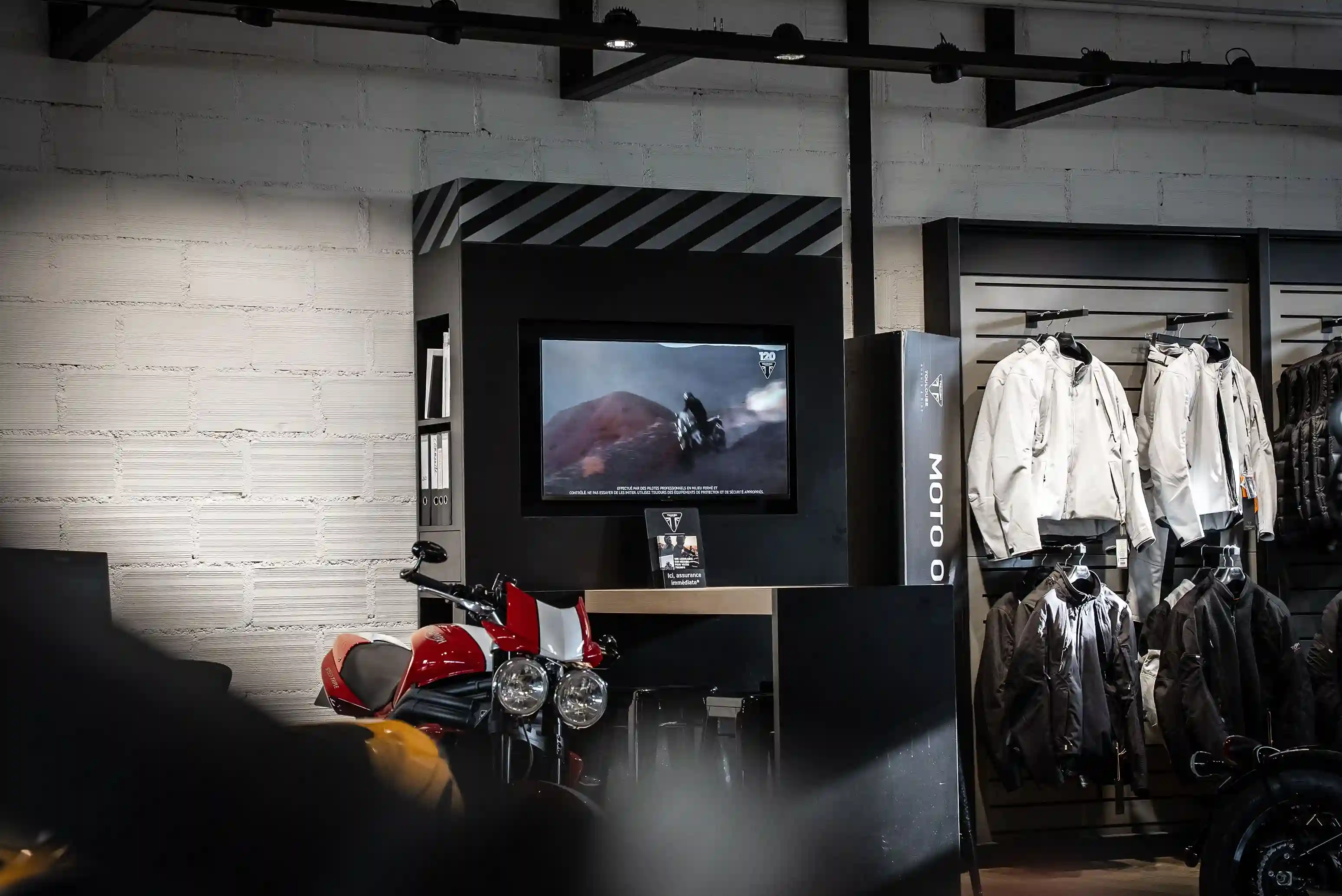
The world of retail and corporate communication is coming of age. This is where the emergence of a new generation of uses comes into play, the culmination of the digital transition. Until now, digital signage was the poor relative of the media mix, confined to a utilitarian role in the layout of spaces: a pretty but passive “wallboard”, broadcasting promotional loops that were often disconnected from the customer's reality.
To mark the beginning of the year, Béatrice de Rivet, CMO at Cenareo, leader in digital signage, reveals its vision of retail by 2026.
In 2026, the screen is no longer content with being a surface; it is becoming an active and synchronized digital agent according to dozens of parameters. He can recognize us, adapt his speech to our mood, weather, store attendance or stock status. It allows you to pay instantly and optimizes your carbon footprint in real time. The challenge is at the crossroads of two worlds: the best of content and the excellence of the technical stack.
Agentic AI: the end of frozen content.
AI is no longer just helping with planning, it's getting behind the wheel. We are entering the age of content agentization. Thanks to real-time data processing, the screen has superpowers: it generates and adapts the visual message (almost) on the fly.
While Google makes search conversational, Cenareo makes display contextual and transactional. It is the optimization of the last media pixel that meets the “wow” effect to awaken the attention of the nonchalant shopper.
In-store Retail Media: the screen pays its own rent.
Digital signage is moving from a cost center to a revenue generator. Like Connected TV (CTV), stores transform their m² into monetizable advertising space. By merging the display and the point of sale programmatically, the screen no longer costs, it pays off. These models open up thanks to the ease of connecting the tools, making the control function accessible. Why not promote your screens through partner or collaborative content? At the crossroads of advertising and transactional, the opportunities are endless.
Creative maximalism: capturing attention in a saturated world.
To engage Gen Z, the flat image is dead (Dead). Gamification and the “crazy” nature of content are essential to glean a few crumbs of attention. The 2026 trend is towards immersion: 3D without glasses (anamorphoses), high-definition LED panels, “Live” content and brain illusions. By integrating social feeds (TikTok, Instagram) in real time, we create immediate social proof. Result? A commitment boosted by 45% (Source: Channelplay).
Seamless omnicanality: the “phygital” bridge
Every marketer's dream comes to life: connect all touchpoints right down to the last physical meter. The BYOD trend (Bring Your Own Device) reflects consumer expectations: it is up to the store to adapt to its schedules and desires, and not the other way around. We start an experience on mobile, we live it in large format on a 3-meter screen, and we conclude the purchase via an integrated QR code. It's the end of the silos.
“Green” Performance: sustainability as an indicator
In 2026, eco-responsibility is a strict technical requirement. “Green Signage” is essential: intelligent light management, low-consumption hardware and recyclable materials. Beyond the technique, it is a selling point: the display must demonstrate how the brand helps the consumer to be more sustainable (second hand, energy saving).
The diagnosis is clear: ignoring these developments is condemning your screen fleet to obsolescence. The competition will be between those who own surfaces and those who deploy intelligent conversational interfaces.
It's not about selling pixels, it's about orchestrating relevance. The question is no longer whether we should digitize points of sale, but how quickly we will make our screens finally useful to our business.


.avif)